Blog

Different gears, same car: understanding the difference between public affairs and media relations

Public affairs and media relations are two distinct but complementary disciplines that are essential for any successful communications strategy. They may seem similar, but they serve different purposes, and each requires a unique set of skills and strategies to function effectively.

To better understand the differences between public affairs and media relations, consider them as two different gears in a car’s transmission. Just as the clutch engages with the engine to transfer power to the wheels, public affairs engages with the government and community to advance an organization’s goals and protect its reputation. Similarly, media relations, like the gearbox, allows the car to move at different speeds and on different terrains by building relationships with journalists and the media to gain positive news coverage and manage crisis communications.

While both disciplines involve building relationships with key stakeholders and require an understanding of the broader context in which an organization operates, they have different target audiences and goals. Public affairs focuses on government officials, policymakers, and the general public to shape laws, regulations, and policies, while media relations is focused on journalists and the news media to gain positive news coverage.

The success of each discipline is also measured differently. Public affairs success is often measured by changes in laws or regulations, or by increased public awareness and support. In contrast, media relations success is often measured by positive news coverage, increased media mentions, or improved relationships with key journalists and editors.

By combining these two distinct gears in a car’s transmission, organizations can develop a comprehensive communications plan that addresses both public and media concerns and helps them to advance their goals and objectives. Just as the clutch and gearbox must work together smoothly and at the right time to ensure the car moves forward, public affairs and media relations must work together to ensure an organization’s communications strategy is effective and efficient.

How to maximize your PRSA membership: tips from your friendly neighborhood President-elect

As a PRSA member and president elect of the Dayton area chapter, I can attest to the fact that being part of PRSA has opened up many opportunities for me professionally as I developed my career. But it’s not just about the professional benefits – I have also created lasting friendships with people who often face the same daily struggles and successes as public relations professionals. The connections I’ve made through PRSA have been invaluable both in terms of advancing my career and enhancing my personal life. I’m excited to share some of my top tips for making the most out of your PRSA membership, so keep reading!

Keep tabs on your chapter’s social media platforms.

Social media is a great way to stay connected with your local PRSA chapter. Make sure to follow their LinkedIn and Facebook pages, Twitter account, and email list for updates on upcoming events, industry news, and other relevant information. By staying engaged on these platforms, you’ll be able to build relationships with other PR professionals in your area.

Attend in-person events and leave time to network.

One of the best ways to build connections and camaraderie in the PR industry is by attending in-person events. Whether it’s a lunch and learn, awards ceremony, or meet the media day, these events provide an opportunity to network with other professionals and learn from experts in the field. Make sure to leave time to mingle and chat with other attendees – you never know who you might meet!

Sign up for loads of free classes through PRSA’s national website using your membership.

PRSA offers a wide variety of educational resources to its members, including free classes that count towards maintaining your Accreditation in Public Relations (APR). Take advantage of these opportunities to expand your knowledge and skill set in the PR industry.

Look for ways to give back.

Giving back to your local PR community is a great way to get involved and make a difference. PRSA offers many volunteer opportunities on boards, committees, or even as a speaker in an area you’re an expert in. You can also volunteer to conduct resume reviews for students in your local PRSSA chapter. Not only will you be giving back, but you’ll also be building your network and reputation as a leader in the industry.

Get your brand out there.

PRSA membership provides access to a specific audience for your brand with sponsorship opportunities both online and at in-person events. Take advantage of these opportunities to build affinity for your brand and get your message in front of other PR professionals.

I hope you found these tips helpful for getting the most out of your PRSA membership. I’m always happy to chat more about my experience with the organization and answer any questions you may have. So if you’re interested in learning more, why not meet up for coffee? I’d love to hear about what you’re looking for in a PRSA membership and share more about the benefits I’ve experienced. Don’t hesitate to reach out and let’s connect!

The main course or just a taste? Understanding the differences between press releases and media advisories

When it comes to public relations, two of the most common tools used by professionals are press releases and media advisories. Both serve a similar purpose, which is to inform the media about an event, announcement, or development related to a company, organization or individual. However, there are some key differences between the two that are worth noting. In this blog post, we’ll explore the similarities and differences between press releases and media advisories, using the analogy of a full-course meal versus an appetizer.

Think of a press release as a full-course meal, with all the necessary ingredients, flavors and textures to make a satisfying and complete dish. It’s like a well-prepared dish that takes time and effort to create, with all the right components carefully selected and blended to create a memorable experience. Just as a meal can be enjoyed by a group of people with different tastes and preferences, a press release is designed to appeal to a broad audience of media professionals, including reporters, editors, and producers.

A press release is a formal document that includes all the key details related to the announcement, such as who, what, when, where, why and how. It is typically longer than a media advisory, often ranging from 300 to 800 words, depending on the complexity of the announcement. Press releases are often used to announce product launches, corporate events, executive appointments, and other significant developments related to a business or organization. They also often include quotes from company representatives, statistics, and other relevant information to add depth and context to the story.

In contrast, a media advisory is more like an appetizer or a sampler platter. It’s a smaller, bite-sized portion of the full meal, designed to give the media a taste of what’s to come. It’s like a teaser that piques the interest of the media and invites them to attend the event or cover the story in more detail later on. Just as an appetizer can be used to whet the appetite and set the stage for the main course, a media advisory is designed to provide just enough information to generate interest and create buzz.

A media advisory is a shorter, more concise document than a press release and typically includes only the most essential information, such as the date, time, location, and purpose of the event. It is often used to invite reporters to attend press conferences, media briefings and other events where company representatives will be available to answer questions. Media advisories are usually shorter than press releases, often ranging from 50 to 150 words, and are designed to be easy to read and quickly convey the most important information.

Despite their differences, press releases and media advisories share some commonalities. Both are designed to communicate news and information to the media and are a critical component of a successful public relations strategy. Both also require careful consideration of the target audience, the message being conveyed and the tone and style of the communication.

In conclusion, press releases and media advisories are both important tools for public relations professionals. While they serve a similar purpose, they have different formats and are used for different types of announcements. Understanding the differences between the two can help PR professionals determine which tool is most appropriate for a particular situation and help them to communicate their message effectively to the media, just as a skilled chef knows when to serve a full-course meal versus an appetizer to create a memorable dining experience.

5 Things Every Social Media Manager Must Do

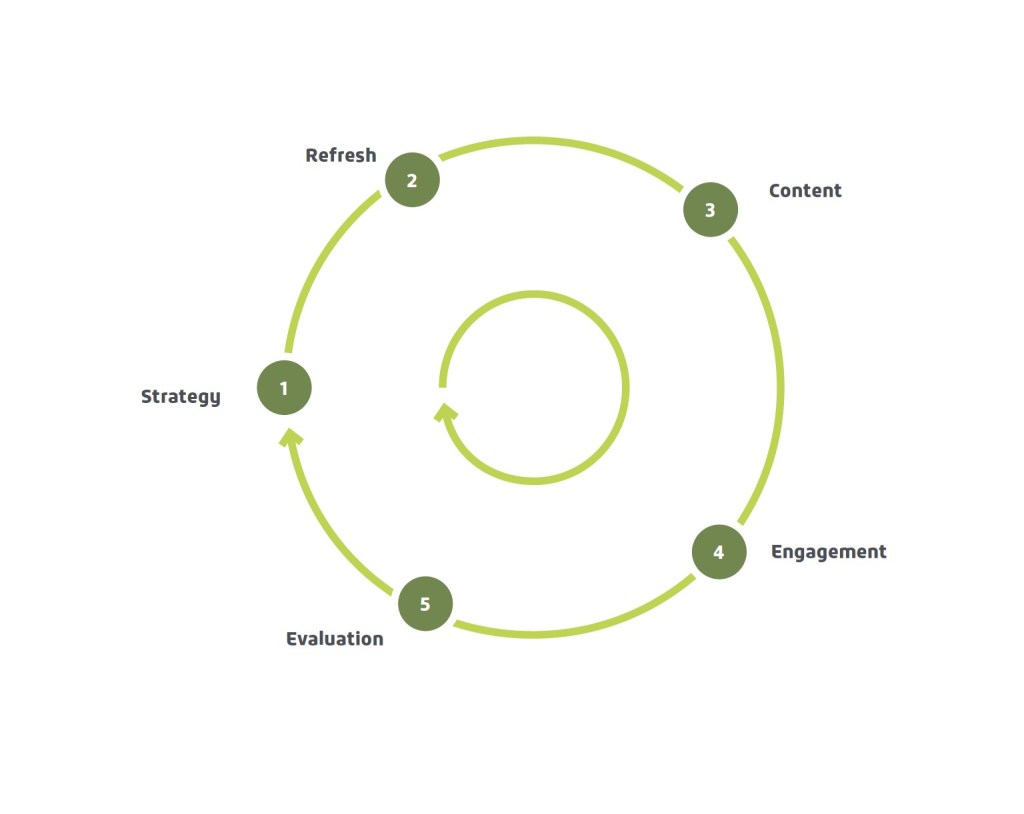
Managing social media isn’t a walk in the park. You’ve got content to create, people to respond to, and bosses to please. To make your job just a little bit smoother, we’ve described five important tasks that can help you make the most of your job description.

1. Start with a social media strategy.

An effective strategy tells you what to post where, when, and how while giving you the power to prove why social media should matter to your boss. Creating a strategy doesn’t have to be a long, convoluted process, but you do need to invest time right from the start in establishing a clear direction for your social media program. Try filling out this worksheet to organize your thoughts.

2. Set up or refresh your social media profiles.

Once you have a strategy, you’ll have identified what platforms you should be using to best reach your target audience. Create about sections that accurately tell your brand’s story while also using keywords that people would associate with the services or products you provide. Create the appropriate profile images, header photos and videos that are free from cumbersome text overlays, and visually in line with the overall look and feel of the company.

3. Create content your audience and boss wants to see.

Since you’ve already completed the strategy, you should have an editorial calendar that can give you a high-level structure for what you should be talking about when. Remember that it’s not just about the marketing messages you want to send. It’s also about providing interesting moments of joy for your followers.

“I’ve learned that people will forget what you said, people will forget what you did, but people will never forget how you made them feel.” ― Maya Angelou 

How you make people feel is a significant part of your brand’s reputation on social media.

4. Respond to people, even the haters.

We can all agree that sometimes people have serious FeELinGs when it comes to online conversations. Remember to never take it personally and always respond with authenticity and grace. Even if you can’t make them feel better about their situation, you can prove to everyone else reading the exchange that your company is simultaneously compassionate and professional.

67% of consumers used a company’s social media site for servicing. 

We’ve written before about customer service on social media, so you can arm yourself with these tips.

5. Evaluate if what you’re doing is really worth it.

You’ve identified the KPIs in your social media strategy, but those numbers aren’t going to check themselves. Pop over to the Insights section of Facebook or Google Analytics on your website to make sure your goals are on target. We typically check our client’s accounts once a week and provide a report at the beginning of each month. And when you don’t hit your goals? Adjust your strategy. Keep in tune with the content your audience enjoys most and how you can continue to develop your brand’s positive relationship with them. Yes, you should measure conversion rates and impressions, but you can’t do so at the expense of the quality interactions you can have with individuals.

71% of consumers who have had a positive experience with a brand on social media are likely to recommend the brand to their friends and family. 

No alt text provided for this image

Breaking your sometimes overwhelming job into these five areas can really help your day seem more manageable, especially when you have to quickly evaluate competing priorities. It can also take a toll on your mental health, but there are ways we can lift each other up:

Researchers at the University of Pittsburgh recently studied adults aged 18-30 and found that a direct relation to increased depression and negative social media experiences. For every 10% increase in reported negative experiences on social media, there was a 20% leap in the person’s odds of reporting depressive symptoms. 

It takes an incredible amount of brilliance and bravery to create and write thousands of pieces of content per year, and put each and everyone on the internet for it to be critiqued. 

Please, ask your social media manager if they’re okay. Give them the resources to succeed. Tell them you appreciate them and send them funny memes. Trust me, it can only help. 

From  Should you ask your social media manager if they’re okay?  By Thea Neil

And ways we can lift ourselves up:

Find Time for Daily Meditation 

Control Your Social Media Feeds 

Monitor Your Screen Time and Set Limits 

Set Self-Care Goals 

Take a Social Media Break 

Give Your Eyes a Break With These Podcasts to Help Your Mental Health 

Ask For Help When You Need It 

From  7 Mental Health Tips for Social Media Managers  by Taylor Loren

Go forth with all your newfound knowledge and don’t be afraid to ask for a helping hand!

4 simple tactics to increase brand affinity

An effective marketing message finds its roots buried deep in human emotions. When brands inspire happy, sad, afraid/surprised, or angry/disgusted feelings, consumers remember and often take an immediate action in response to their emotions. A moving picture on social media or a powerful political stance might be enough for some companies, but you may not have thought of these four simple tactics that increase consumer affinity for your brand.

1. User Experience

The most effective user experience involves looking for moments where design can positively affect a person’s emotions. Details like form submission acknowledgments, status updates, or intuitive interfaces can build trust between the end user and your brand. (Machine DesignIt’s important to base your decisions on data, rather than assumptions about your end user.

In Analyzing usage: Visualizing end-user workflows to drive product development, Pierre Montagano suggests conducting research with questions like “Where are my end users coming from? How do users behave in a platform? What drives engagement? And what creates disengagement? How do I make my platform more efficient for users?”

A moderate increase in Customer Experience generates an average revenue increase of $823 million over three years for a company with $1 billion in annual revenues. (Temkin Group)

One of my favorite Maya Angelou quotes applies to almost every interaction I have in life, including when I’m creating something for a client.

“I’ve learned that people will forget what you said, people will forget what you did, but people will never forget how you made them feel.” 

Focusing on how people experience your brand dramatically impacts the emotions consumers feel for your company and how they share those feelings with others.

2. Individual Conversations

You may have thousands of customers, but even treating one person poorly is the quickest way to build a bad reputation, particularly with the prevalence of social media. Thankfully, social media also presents an incredible opportunity to have positive interactions with a customer in a way that humanizes your brand.

67% of consumers used a company’s social media site for servicing. ( Sprout Social

When you can help solve a problem someone is facing, other people notice your excellent customer service whether through seeing your Twitter responses or by hearing the satisfied customer describe the interaction. Today, referrals exist in digital spaces as well as a client dinner. LinkedIn reports that 76% of B2B buyers prefer to work with recommendations from their professional network. Leveraging a strategic investment in a solid social media strategy can have a positive impact on your bottom line as you begin to build these authentic, postive moments with individuals.

Keith Grossman, global chief revenue officer at Bloomberg Media shared the moment he recognized the power of individual interactions with AdWeek: “I realized that if you humanize your brand and show the consumer base that you care about them it’s a far better place to be in.”

3. Cause Marketing

in 1983, American Express Travel Services first coined the term “cause-related marketing” to describe the marketing tactic leveraging charitable efforts to improve a company’s reputation. Connecting your company with a meaningful purpose has a big impact the cause you support and on how consumers perceive your brand. 

77% of consumers feel a stronger emotional connection to Purpose-driven companies over traditional companies, 79% say they are more loyal and 73% are willing to defend that company. (2018 Cone/Porter Novelli Purpose Study)

In “The Triple Win of Cause Marketing,” author Michael Guld illustrates how an individual feels positively about participating in cause-related campaigns. “Consider… a bank’s campaign featuring a picture of a woman with the headline, ‘I opened a checking account and helped find a cure.’ For every new checking account opened… the bank would donate $100 in the customer’s name to the charity of [their] choice. Bank customers feel good about making a difference, the bank builds their reputation as a good corporate citizen and the non-profits receive additional funding they otherwise would not have had.” (American Salesman)

When selecting a nonprofit to tie with your brand, be sure to consider not only what causes you are passionate about but who your customers would like to support, the reliability of the organization, and the relationship to existing brand messages.

The number one issue in the eyes of all young Americans surveyed was Civil Rights/Racial Discrimination (29%), followed by Gun Safety (22%), Immigration (21%) and Climate Change (21%) (2018 Cause and Social Influence’s Influencing Young America to Act)

Cause marketing doesn’t have to be restricted to monetary donations. Members of the Nova Creative volunteer on boards and donate expertise in addition to a financial gift each season. Your options are endless as long as your message is authentic.

4. Company Culture

An intentionally positive company culture has the potential to reduce turnover and attracting new talent, but it also reassures your customers that your engaged employees committed to being the same energy to their projects. While you might think of company culture as fun office parties and silly social media posts, the tone of everyday office life is set by the leader.

“Culture is set in the boardroom, not through HR,” says Amy Schabacker Dufrane, CEO of HR Certification Institute. “But HR can make sure that company culture stays at the forefront of every discussion and is modeled at every level. The old adage that culture eats strategy for breakfast is really true.” (Workforce)

If you are already participating in a purposeful cause marketing campaign, you could bring the same principles internally for your employees. An easy place to start could be within an existing framework like the United Way’s Workplace Giving program.

Turnover dropped by 57% in employee groups most deeply connected to their companies’ giving and volunteering efforts. (Benevity Engagement Study) 

Refining and maintaining your brand’s personality can easily be lost in the day-to-day rush of deadlines and meetings, but your business could be missing out on an opportunity to reduce expensive turnover costs and build a better reputation with your clients.
How to prepare for an interview with a reporter

Meeting with a reporter for the first time can be intimidating. What if they are just digging for the next big scoop? What if you say something they can take out of context? While most reporters don’t have a malicious intent when interviewing, it’s best to do your homework and prepare for your big interview. Here are six things you need to know to ensure you represent your company well and lay the foundation for a positive relationship with your media contact.

1. Know your reporter.

To clarify, this doesn’t mean stalking them online. You don’t need to know how many kids they have or where they’re originally from. If anything, those questions can come up naturally in conversation when you meet. What you do need to know in advance is what topics they cover, their reporting style, if anyone in your network has a relationship with them already and their preferred method of communication. Reporters can get hundreds of emails a day with story pitches, internal communications, or updates on ongoing stories. They don’t have time to respond to your email asking what they cover when their topics are listed in their bio on their news outlet website. Read or watch news pieces they have already created, talk to people in your network that have worked with them before, do everything you can to make it as easy as possible for the reporter to say yes to a meeting or interview.

2. Know your topic.

As a representative of your organization, you may not always be the subject matter expert in the same way your company’s engineers or case managers are, but that doesn’t mean you get a pass for not knowing about your topic. A major goal of media relations is to build public awareness and thought leadership so you need to be prepared to answer as many questions as possible about what your company does and why it’s important to the reporter’s readers. Don’t ever guess at numbers or statistics. If you do get to a point where you don’t know something, write that questions down and say you’ll get back to them right away with a firm answer. Misinformation is more dangerous to your company’s reputation than your momentary lapse in knowledge and a good reporter will respect that you want their piece to be as accurate as possible.

3. Know the reporter’s goals.

No, they won’t give you the questions beforehand. No, they won’t let you edit the piece before it’s published. A reporter has committed to communicating information that affects their readers lives and informs them about their world. They have not committed to promoting your new product, showing how innovative your business is or asking people to attend your event even though those may be your goals. Look for new opportunities where your goals intersect with the reporter’s and be respectful of how they view their profession.

TIP: If you’re really that concerned about editorial control or if you’re not getting the coverage you need, consider paying for a sponsored article in your local paper. A form of Native Advertising, sponsored content is designed to blend in with editorial content.

4. Know what a reporter needs.

If you’re speaking to a reporter from a TV station, they will need extra footage to intercut with the main interview. Called B-Roll, this could be shots of walking through the building, interacting with clients, machines in motion or even signing papers at your desk. If you’re speaking with a print reporter, they will need high-resolution images of your subject matter for publication and caption suggestions. All reporters will need a fact sheet on your organization and initiative with brief summary points, statistics, and contact information. Most companies wrap this up into a single media kit for reporters to access online, but always ask what else you can provide the reporter to support their story. Positioning yourself as a helper and resource will help build a positive relationship with the reporter.

5. Know how to be interviewed.

First and foremost, take deep breaths and relax. Any tension in your shoulders and voice can affect your reporter’s impression and the tone of the final story so you want to make every effort to practice being patient and approachable. In addition to understanding your message, the reporter is looking for bite-sized quotable moments so take your time to gather your thoughts before you reply. Practice active listening techniques to ensure you understand where the reporter is leading the conversation and always keep your cool when they ask potentially sensitive questions. Be firm and polite when responding to potentially explosive topics and remember that explaining why you won’t give a comment on something is still a comment.

6. Know the best ways to follow up.

When was the last time you received a handwritten thank you card for doing your job? Or even a quick Tweet telling you how your work helped someone else? Doing simple follow-ups to show your appreciation for the reporter’s time will help you stand out in a massive herd of people clamoring for attention. And no, that is not the time for another pitch or request. Even if it gets you no additional coverage or another positive meeting, you’ll have the satisfaction of knowing you’re making a busy and hectic world a little bit brighter place.

How to choose the best social media platforms for your brand

Facebook, Pinterest, Snapchat, oh my! With all the social media platforms out there and your CEO asking you to “do the social media thing,” how do you determine what platform is best for your brand?

According to Social Media Examiner’s research, 97% of marketers are currently participating in social media—but 85% of participants aren’t sure what social media tools are the best to use.1

Aligning your social media efforts with business objectives is half the battle, but you still need to understand how they work, so your efforts won’t be wasted. Answering these four questions will ensure your social media strategy has a strong foundation.

What social media platforms support your goals?

I’m a firm believer that if a social media platform doesn’t support your marketing goals, you shouldn’t invest your time or budget in it. Take time to determine what your goals are and how that translates to your organic social media strategy. Is your primary goal Top of Mind Awareness? Twitter is a high-volume platform great for pushing out large amounts of information in quick bites. Is your goal focused on company culture and recruiting? LinkedIn has an excellent section for posting jobs and resources for recruiter accounts. What about driving website traffic? Pins on Pinterest consistently delivers the highest number of outbound clicks. We’ve created a quick guide for you to reference during this process, so you know what each major platform primarily delivers to brands.

Which social media platforms does your target audience use?

One of the quickest ways to determine what platform your brand needs to be on is by understanding who your target audience is and what social media platforms they are using. Personas are perfect to fully picture who you’re trying to reach. (Don’t worry if you don’t have one! We can help you focus your marketing efforts by creating personas.) If you’re targeting 50-year-old men interested in landscaping, you really don’t need to worry about Snapchat right now. If you’re targeting suburban women ages 30-40, Pinterest is your go to. The chart below will help you quickly find where you need to be to reach your target audience.

Do you have the resources to use the social media platform effectively?

If you’ve decided to be on a social media platform, ensure you have the resources to use the platform correctly and maximize the effectiveness. It’s better to not have a Twitter account at all than a Twitter account that spits out a sales-y message once a month. If you can’t regularly post quality lifestyle images once a week, stay away from Instagram.

There are excellent social media management tools to help you keep up with the volume of content (like Buffer or Hootsuite) and agencies to help you develop a strategy and content, but you need to do the research and be realistic about your budget. We put together a chart showing you what types of content perform best on each social media platform.

Can you measure the results of your social media strategy?

Most likely, your new social media strategy will require more time and resources to execute and you will need data to support that investment when your CEO asks if the “new social thing” is working. Not every social media platform has the same analytic information so a social media management tool (like Buffer or Hootsuite) can help you pull detailed reports in real time. If you decide to use the in-platform analytics, here’s a quick reference of what each platform has available.

At the end of the day, your social media strategy can be a huge asset to your business goals. Reaching your audience with the content they want on the platform they already use can produce results to make your CEO happy.

3 Reasons You Need a Dedicated Work Area

I put off creating a room of my own for several years. I had many, many excuses. Some valid, some completely ridiculous. Everything from our home or apartment was too small, or the office furniture was too expensive, or the couch and tray table was working just fine! Any of that sound familiar to you? When I finally did create my own space, I noticed three benefits immediately. Continue reading “3 Reasons You Need a Dedicated Work Area”