Insider Tips for Successful Client-PR Agency Management: Lessons from Both Sides of the Table

Having had the unique experience of transitioning from a communications director agency with a diverse book of clients to becoming a client myself with a focus on health care, I’ve gained valuable insights into managing a PR agency effectively. I have a few practical tips and perspectives that can help you navigate the intricacies of working with a PR agency as a client. These are some of my favorite strategies that can promote clarity, collaboration and successful outcomes, ensuring a true partnership with your PR agency.

  1. Establish Clear Scope and Deliverables:
    To avoid confusion and potential billing issues, it is vital to establish a clear scope of work and define deliverables right from the start. Transparently communicate what falls within the agency’s responsibilities and what does not. This clarity sets the stage for effective alignment and allows both parties to work cohesively toward achieving desired outcomes.
  2. Aligning the Agency with Your Organization:
    Sharing an organizational chart with your agency can provide them with valuable context and understanding of your company’s structure. By illustrating where the agency fits within the larger picture of your organization, you enable them to navigate reporting lines, communication channels, and key stakeholders more effectively. This alignment strengthens the agency’s ability to represent your company’s goals and objectives accurately.
  3. Streamline Approval Processes:
    Simplify and expedite the approval process by designating a specific individual responsible for managing approvals. Clearly communicate the approval path, from the agency’s submission to the final sign-off. Streamlining this process ensures timely feedback, maintains messaging consistency, and keeps projects on track.
  4. Celebrate Successes and Address Setbacks:
    Recognizing and celebrating successful PR campaigns and initiatives is crucial for motivating and inspiring your agency. Highlight specific examples of achievements and explain why they were successful, reinforcing positive practices. Conversely, when challenges arise, address them promptly and openly. Engage in constructive dialogue to identify the causes and collaboratively develop strategies for improvement. This approach fosters a culture of continuous learning and growth.
  5. Foster Collaboration and Provide Feedback:
    Promote collaboration by dedicating meeting time to discuss not only the work being done but also how it is being accomplished. Encourage open dialogue on collaboration processes, communication methods, and workflow enhancements. By fostering an environment where feedback is valued, both you and your agency can refine your working relationship, improve efficiency, and achieve stronger outcomes.

Managing an agency requires clear communication, transparency and collaboration. By being upfront about expectations, clarifying deliverables, aligning the agency within your organization’s structure, streamlining approvals, celebrating successes and fostering open dialogue, you can create a productive and successful partnership. Together, you and your PR agency can create impactful and successful PR campaigns that align with your brand and communication objectives.

Mastering the art of content creation: using ChatGPT as an ingredient in public relations

ChatGPT has become a highly valued tool in public relations due to its ability to generate human-like responses and create compelling content. However, the way in which the content is sourced is crucial, much like the ingredients used in a recipe.

As a chef carefully selects their ingredients, a public relations professional must also be cautious in how they use ChatGPT. One approach is to use it as a seasoning, similar to how a chef might use salt and pepper to enhance the flavor of a dish. In this method, ChatGPT can refine the language and suggest alternative phrases, adding flavor to the content. However, too much seasoning can overpower the content, resulting in a bland or robotic taste.

Alternatively, one could use ChatGPT as the main ingredient, like flour in a cake. This method involves letting the model generate the entire content, which can be attributed to it. This can be transparent and honest, much like a cake that shows off its key ingredient. However, just like a cake made only of flour, ChatGPT-generated content may lack coherence and consistency, leaving the audience unsatisfied.

A third approach is to use ChatGPT as a collaborative tool, much like a team of chefs working together to create a dish. In this method, the public relations professional and ChatGPT work together, with the professional providing the main message and tone of the content, and ChatGPT offering suggestions and alternative phrasings. This method can result in a delicious blend of human and machine input, much like a well-crafted dish that combines various flavors and textures.

To use ChatGPT as a seasoning, a public relations professional can review the content generated by the model and adjust it as necessary, ensuring that it fits with the overall message and tone of the campaign. While this method can save time and effort, it may also result in content that lacks creativity and spontaneity.

Using ChatGPT as the main ingredient requires a public relations professional to trust the model to generate the content entirely. This method can be efficient and cost-effective, but it may lack the nuance and empathy that a human writer can provide. Additionally, it can be challenging to ensure that the content is aligned with the desired messaging and tone.

The collaborative approach involves combining the strengths of both human and machine intelligence, with each contributing to the overall content. This method requires a significant amount of time and effort, but it can result in high-quality content that engages the audience and conveys the desired message.

Like a chef carefully selecting their ingredients, a public relations professional must also be careful in how they use ChatGPT. Using ChatGPT as a seasoning, the main ingredient, or as part of a collaborative effort requires a thoughtful approach to ensure that the resulting content is engaging, coherent, and aligned with the desired messaging and tone.

Inspiration, community and recognition: An inside look at the Gem City PR Awards banquet

I am absolutely thrilled to share with you the incredible success and excitement that unfolded at this year’s Gem City PR Awards banquet. As the President-elect for PRSA Dayton and Awards Co-Chair for the Gem City PR Awards, I had the privilege of being part of a remarkable event that recognized the outstanding achievements of our local communications professionals in Dayton, Ohio. Trust me when I say, this was an evening filled with inspiration, camaraderie and celebration!

The Gem City PR Awards, presented by CareSource, took place on May 24, 2023, at the beautiful Top of the Market Banquet Center. This highly anticipated ceremony has become an annual tradition, where we gather to honor and acknowledge the exceptional talent in public relations throughout the Miami Valley. As Steven Solomon, President of the Dayton Area Chapter, eloquently put it, “We have an amazing community of marketing and communications professionals here in Dayton and the Miami Valley. It’s truly an honor to pause and celebrate their accomplishments.”

Throughout the evening, we had the pleasure of recognizing eight local businesses who truly stood out in six categories for their superior work in public relations. The competition was fierce, and each winner showcased their excellence and dedication in their respective fields. Three PR Awards and 12 Awards of Merit were given out, making it abundantly clear that our region is home to remarkable PR professionals.

One of the highlights of the evening was the presentation of the prestigious “Best in Show” award, which went to Crystal Allen, CEO of the Boys & Girls Club of Dayton. Crystal accepted this well-deserved recognition for the exceptional article titled “MAKE A DIFFERENCE: Kids in West Dayton Need School Supplies and More.” This impactful piece was published by the Dayton Daily News on October 15, 2022. I had the honor of contributing to the article as a media relations specialist at CareSource. Crystal was also commended for the positive news coverage generated by the Club under her exemplary leadership. It was a truly inspiring moment that showcased the power of effective public relations in making a difference in our community.

In addition to the organization awards, we celebrated outstanding individuals and newsmakers who are shaping Dayton into a better place to live and work. Let’s take a moment to recognize these exceptional individuals:

  1. Benjamin Baugham, Community Engagement Coordinator, received the Young Professional of the Year award and was nominated by Bill Perry and Sarah Chapman.
  2. Helen Jones-Kelley, Executive Director of Montgomery County ADAMHS, was named Newsmaker of the Year and was nominated by Tina Rezash Rogal.
  3. Lynn Hulsey, an investigative reporter at the Dayton Daily News, was honored as Media Friend of the Year and nominated by Joe Kelley.
  4. Mark D. Weinstein, Executive Director of Public Relations at Cedarville University, received the prestigious Communicator of the Year award and was nominated by Clem Boyd.

These individuals have truly made an impact on our community through their dedication, innovation, and commitment to excellence. We are fortunate to have such remarkable professionals in our midst.

One of the most remarkable aspects of the Gem City PR Awards was witnessing the unity and collaboration of the entire PRSA Dayton board. As the awards co-chair, I had the privilege of working alongside an incredible team who went above and beyond to ensure that every detail of the event was meticulously planned. From coordinating the venue to curating an exquisite menu, from organizing the judging process to ensuring the nominations were handled seamlessly, our board rallied together to create an unforgettable evening. I am immensely proud of how we came together to guarantee that everyone who attended could relax and enjoy in the celebration of our remarkable community.

To all the Gem City PR award winners, congratulations on your well-deserved recognition! Your hard work, creativity, and strategic brilliance have set the bar high for our industry. I have no doubt that your accomplishments will continue to inspire and motivate others in the field.

I would also like to express my heartfelt gratitude to our incredible sponsors who played a vital role in making the Gem City PR Awards a resounding success. Thank you to CareSourceFahlgren MortineTriComB2BJamie Kenny and Kenny Consulting Group, Montgomery County Veterans Service Commission, Gabriel Marketing LLC, Preservation Society, and Minuteman Press. Your support and commitment to the public relations community are deeply appreciated.

For those who couldn’t attend this year’s event, don’t worry! You can relive the excitement and view photos soon from the evening on PRSA Dayton’s Facebook page. Remember to mark your calendars, as nominations for the next Gem City PR Awards will open in January 2024 via the PRSA Dayton website. This is an opportunity you won’t want to miss!

I want to express my utmost gratitude to PRSA Dayton for giving me the opportunity to contribute to the success of the Gem City PR Awards. As a passionate member of this profession, I am incredibly proud of our community’s accomplishments, and I can’t wait to see what the future holds for each and every one of us.

Let’s continue to raise the bar, inspire one another, and create meaningful connections through the power of public relations. Together, we can make a difference, not only in Dayton but throughout our lives.

Exploring the Limitations of ChatGPT for Public Relations: What PR Professionals Need to Know

While ChatGPT is a powerful AI tool for generating text, there are some limitations to using it for public relations purposes. Here are some of the main limitations to consider:

  • Lack of domain-specific knowledge: ChatGPT is trained on a large corpus of text data, but it may not have the same level of domain-specific knowledge as a human PR professional. This means that while ChatGPT can generate text on a given topic, it may not fully understand the nuances of the public relations field.
  • Limited creativity: While ChatGPT can generate text that follows a specific theme or topic, it may lack the creativity and innovation that a human writer can bring to the table. This can result in content that is formulaic or lacks originality.
  • Limited ability to understand context: While ChatGPT can generate text based on the prompts given to it, it may struggle to fully understand the context or tone of the content it is generating. This can result in content that is irrelevant or inappropriate for the intended audience.
  • Risk of generating biased or inappropriate content: AI models like ChatGPT are only as unbiased as the data they are trained on. If the training data contains biases or inappropriate language, the model may replicate those biases in its generated text.
  • Limited ability to provide strategic advice: While ChatGPT can generate text, it cannot provide strategic advice or guidance on public relations strategy. Human PR professionals are needed to make strategic decisions about how to communicate with the public, handle crisis situations, and build a brand reputation.

ChatGPT and any AI language tool can be a useful for generating text in the public relations field, but it is important to recognize its limitations and to use it in conjunction with human expertise and strategic thinking.

Unleashing the power of ChatGPT: how to write compelling prompts for public relations

Public relations involves managing the communication between the company and the public, which is essential for building brand reputation, promoting products, and engaging with customers. However, with the increasing use of technology and social media, it has become more challenging to keep up with the demands of public relations.

One way to tackle this challenge is to leverage artificial intelligence (AI) tools, such as ChatGPT. ChatGPT is a powerful language model that has been trained on a vast amounts of text data, making it an ideal tool for generating high-quality public relations content.

But you have to create effective prompts.

In the context of ChatGPT, a prompt is a specific set of instructions or a guiding question that is given to the AI model to generate text. The prompt acts as a starting point or a seed for the model to generate text that follows a specific theme or topic. The quality of the generated text depends on the quality of the prompt given to the model. Well-crafted prompts that are clear, specific and relevant to the topic at hand will produce more accurate and useful results from ChatGPT.

Here are some tips on how to approach writing prompts for ChatGPT:

  1. Understand your audience: The first step in creating effective prompts is to understand your audience. Who are you writing for? What are their interests and needs? What kind of content would they find valuable? By answering these questions, you can tailor your prompts to your target audience, making them more engaging and relevant.
    1. Use specific keywords: Public relations content often revolves around specific topics or keywords. By including these keywords in your prompts, you can ensure that ChatGPT generates content that is relevant to your target audience. For example, if you are writing about “crisis management,” you might include prompts like “how to handle a crisis” or “tips for managing a PR crisis.”
    2. Keep it simple: While ChatGPT is a sophisticated AI tool, it’s important to keep your prompts simple and straightforward. Avoid using complex language or technical jargon that could confuse the AI model. Instead, use simple language and clear instructions to help ChatGPT understand what you’re looking for.
    3. Provide context: To generate the best content, ChatGPT needs to understand the context of your prompts. Provide as much context as possible by including background information, relevant links, and other helpful resources. This will help ChatGPT generate more accurate and relevant content.
    4. Edit and refine: After generating content using ChatGPT, it’s important to edit and refine it to ensure that it meets your standards. While ChatGPT can generate high-quality content, it’s still an AI tool, and there may be errors or inconsistencies that need to be corrected.

With the right prompts, ChatGPT is a powerful tool that can aid in writing effective public relations content. By following these tips and leveraging the capabilities of ChatGPT, you can create high-quality content that engages your target audience and helps build your brand reputation.

How AI language models are revolutionizing the public relations industry

In today’s fast-paced world, where content is king and social media rules the day, the pressure to consistently produce high-quality written material can be overwhelming. As a board member for PRSA Dayton on top of my full-time job at CareSource, I’ve struggled with this challenge myself. However, I’ve found a solution that has revolutionized the way I approach content creation – ChatGPT, an AI language model.

I’m a big believer in the power of AI language models to improve the quality of written communication. When I first started using ChatGPT, I was blown away by its ability to take away the fear of the blank page. I no longer had to worry about struggling to come up with ideas or spending hours crafting the perfect sentence. ChatGPT made the process smoother, faster and more efficient.

But there’s a caveat to using AI language models, and it’s one that we need to be mindful of. We must always focus on quality over quantity. It’s easy to fall into the trap of using AI language models to churn out content at a rapid pace, but this approach can result in robotic writing that doesn’t add value to the conversation.

We must guard against this temptation and ensure that the content we produce with the help of AI is meaningful and adds value to our industry.

Another consideration when using AI language models is ethical guidelines. It’s important to be aware of both company guidelines and ethical standards when using these tools. We must also have a plan for how transparent we want to be about the use of AI in our writing. Do we want to treat it like any other tool, such as spellcheck, or should we treat it as a co-author? These are all important questions to consider.

Personally, I’ve found that using ChatGPT as a tool to help me create content has been a game-changer. It’s allowed me to turn the ideas in my head into written material, and to do so quickly and efficiently. With ChatGPT, I can work on content creation in my spare time and still be productive in my day job. It’s a tool that has allowed me to take my writing to the next level and improve the quality of the content I produce for PRSA Dayton.

AI language models have the potential to revolutionize the way we approach content creation. They can make the process faster, smoother, and more efficient. However, we must always focus on quality over quantity and be mindful of ethical considerations when using these tools. Personally, I’ve found that ChatGPT has been a valuable asset in my role on the board for PRSA Dayton, and I would encourage others to explore the potential of AI language models for their own content creation needs.

Pitching with Purpose: How to Protect Your Brand’s Reputation in the Media

Receiving non-newsworthy pitches can feel like getting stuck in quicksand.

Just as quicksand slows down movement and progress, having to sift through a multitude of irrelevant pitches can impede a journalist’s ability to focus on important stories and meet deadlines. It can also be frustrating to feel trapped and unable to make progress towards covering stories that are genuinely newsworthy.

By comparison, receiving newsworthy information at the right time can help a journalist to meet their deadlines and stay ahead of the competition. It can give them an edge in terms of providing exclusive content that no other publication has covered yet, which can generate interest and engagement from their audience.

Suddenly the person who pitched them goes from irritation and hindrance to valuable source of information.

But what makes a story truly newsworthy?

Journalists use five key areas of evaluation when determining which events and issues are significant enough to warrant coverage..

  1. Timeliness: One of the most important factors in determining whether a story is newsworthy is its timeliness. Stories that are happening now or have just happened are more likely to be considered newsworthy. For example, a major earthquake that just occurred in a populated area would be considered newsworthy, whereas an earthquake that occurred several years ago in a remote location would not.
  2. Impact: Another important factor is the impact the story will have on the community, nation, or even the world. Stories that have a significant impact on people’s lives are more likely to be newsworthy. For example, a decision by a government to increase taxes or a major company announcing layoffs would be considered newsworthy because of the impact it will have on people’s lives.
  3. Proximity: Stories that are geographically close to the audience are more likely to be considered newsworthy. For example, a local event, such as a fundraiser for a school or a protest outside a city hall, would be more newsworthy to a local audience than a national story that has no local impact.
  4. Conflict: Stories that involve conflict or controversy are more likely to be considered newsworthy. For example, a political scandal or a high-profile court case would be considered newsworthy because of the conflict involved.
  5. Human Interest: Stories that have a strong human interest angle are more likely to be considered newsworthy. These are stories that evoke emotions and capture the reader’s attention. For example, a heartwarming story about a local hero or a tragic story about a family who lost everything in a house fire would be considered newsworthy because of their emotional impact.

A pitch that is not newsworthy is one that does not offer any significant changes or benefits to the market, is not relevant to the journalist’s beat or publication, or lacks any specific news angle or significant impact. Journalists constantly discern what is newsworthy and what is not to maintain the credibility of their publications and provide audiences with relevant and informative news.

To give a practical example, let’s consider a local news story about a new policy implemented by a city council to combat traffic congestion.

This story would be considered newsworthy for several reasons. First, it would be timely because it is a recent development and has an immediate impact on residents who are affected by traffic congestion. Second, it has a significant impact on people’s daily lives as it could potentially reduce the amount of time they spend stuck in traffic. Third, the story has proximity since it concerns a local issue that affects the daily lives of the city’s residents.

Furthermore, the story may also be newsworthy because of its conflict. The policy may not be universally popular, and there may be opposition from certain groups or individuals who feel that it is unfair or does not address the root cause of the problem. This conflict could generate interest and engagement from readers or viewers, who are invested in the outcome of the policy.

Most important of all, the story may have a human interest angle. For example, the new policy may disproportionately affect certain groups, such as low-income workers who rely on cars for transportation, and reporters could highlight their stories and how the new policy may impact their lives. A personal story quickly illustrates the importance of a story by putting a face to the issue.

When you’re considering pitching a story, be sure to communicate it’s newsworthy status by describing its timeliness, impact, proximity, potential conflict and human interest. By covering stories that meet these criteria, journalists can provide relevant and informative news to their audiences and help them stay informed about issues that affect their daily lives.

Truly great public relations professionals use this knowledge to protect their brand’s reputation and create positive relationships with journalists by not pitching non-newsworthy items. Instead, you can recommend other communications tactics to deliver messages that are important to your organization’s internal stakeholders.

Receiving exactly the newsworthy information a journalist needs at the right time can be a fulfilling and exhilarating experience, giving them the tools and resources they need to create high-quality news content that informs and engages their audience.

Make it your goal to create that thrill for the journalist on the other end of your email.

Two Social Media Tips from Krista Neher

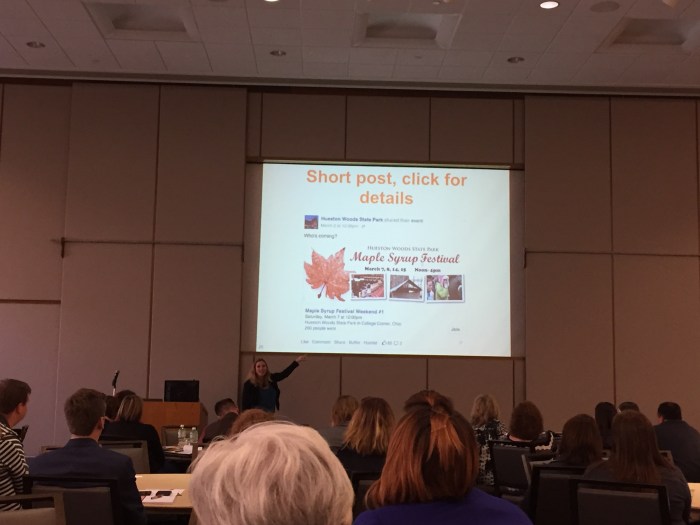
Krista Neher of Boot Camp Digital shared 7 Biggest Social Media Mistakes at 2016’s SummitUp marketing conference. (Don’t worry, you can apply for the free training online!) I’ve seen nonprofits make all seven mistakes, but there’s two changes I made right away to my social media posts at my nonprofit job.

Continue reading “Two Social Media Tips from Krista Neher”